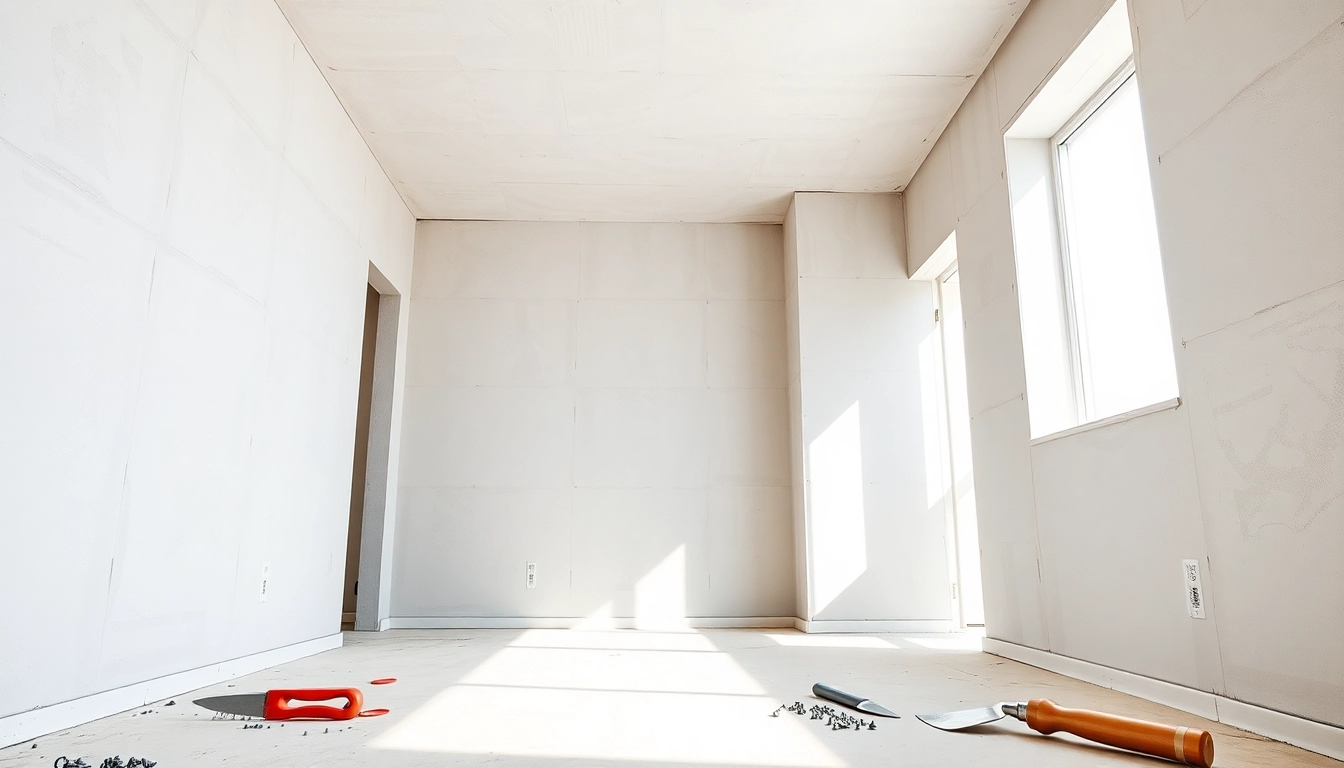
Understanding Drywall Basics
What is Drywall?
Drywall, commonly known as gypsum board, wallboard, or plasterboard, is a lightweight construction material used to create interior walls and ceilings. It is composed of a core made of gypsum plaster, sandwiched between two sheets of thick paper or fiberglass. This versatile building material has become a staple in construction due to its easy installation and flexible design possibilities. Drywall can be shaped to any room layout, making it an ideal choice for both residential and commercial settings.
Types of Drywall Materials
Several types of drywall are available, each designed with specific functions in mind. The most common types include:
- Regular Drywall: Commonly used in standard interior walls and ceilings.
- Moisture-Resistant Drywall: Often used in bathrooms and kitchens; it helps prevent mold and mildew.
- Soundproof Drywall: Designed for noise reduction, this type incorporates sound-dampening materials.
- Fire-Resistant Drywall: Ideal for areas that require enhanced fire safety, with core materials designed to withstand flames.
- Flexible Drywall: Best for curved surfaces, this type is thinner and can bend without breaking.
Benefits of Using Drywall
Using drywall in construction offers numerous benefits:
- Speedy Installation: Drywall can be installed quickly, significantly reducing construction time compared to traditional plaster.
- Cost-Effective: It is generally less expensive than other wall construction methods, making it accessible for various budgets.
- Versatility: Drywall can be finished in multiple ways, including painting, plastering, or adding textures to create aesthetic appeal.
- Fire and Moisture Resistance: Specialized types of drywall provide additional safety and durability in specific environments.
Preparation for Drywall Installation
Essential Tools for Drywall
Before beginning your drywall installation, ensure you have the right tools. Essential tools include:
- Drywall Saw: Used for cutting drywall to fit specific dimensions.
- Drywall T-Square: Helps ensure straight cuts and accurate measurements.
- Utility Knife: Ideal for scoring and snapping drywall sheets.
- Drill: Needed for securing drywall sheets to framing.
- Joint Tape and Compound: For finishing seams and preparing the wall for painting.
- Sanding Block: To smooth the finished joints.
Choosing the Right Drywall Type
Choosing the right type of drywall is critical for your project. Assess the following factors:
- Room Usage: Consider areas prone to moisture (like bathrooms) or noise (like music rooms).
- Fire Safety Regulations: Be aware of local building codes requiring specific fire-rated materials.
- Design Requirements: For unique architectural designs, like curves, you might need flexible drywall.
Measuring and Cutting Techniques
Measuring and cutting drywall accurately is crucial for a professional finish. Follow these steps:
- Measure the Space: Use a tape measure to determine the size of drywall sheets needed.
- Score the Drywall: Use a utility knife to score through the paper on one side, deep enough to cut through the gypsum.
- Snap the Sheet: Bend the cut along the scored line until it snaps, then cut the paper on the other side.
Techniques for Installing Drywall
Hanging Drywall Properly
To ensure a seamless finish, hang drywall properly by following these guidelines:
- Start with the Ceiling: Install drywall on the ceiling first to help support the wall panels.
- Secure with Screws: Use drywall screws rather than nails to avoid cracking; screws should be spaced approximately 16 inches apart.
- Offset Joints: Stagger sheets to avoid aligning seams, which enhances strength and appearance.
Joint Taping and Mudding
Once drywall is hung, the next step is joint taping and mudding:
- Apply Joint Tape: Place joint tape over seams, pressing it into wet joint compound.
- First Coat: Spread a thin layer of joint compound over the tape and seams using a taping knife.
- Sanding: After it dries, gently sand the surface to achieve a smooth finish.
Finishing and Sanding Tips
Finishing drywall is an art that requires patience and technique. Here are some helpful tips:
- Multiple Coats: Don’t hesitate to apply multiple coats of mud to achieve a flawless finish.
- Feathering Edges: When applying compound, feather out the edges to blend with the surrounding surface.
- Proper Sanding: Use fine-grit sandpaper to prevent gouges and imperfections.
Common Drywall Problems and Solutions
Identifying Drywall Damage
Understanding how to identify damage is key to maintaining drywall:
- Cracks: Look for fine cracks where two sheets meet, which might indicate movement.
- Bulging Sections: This could signal moisture issues behind the wall.
- Holes: Small holes from nails or larger damage from impacts need timely repairs.
Repairing Cracks and Holes
Addressing cracks and holes in drywall can be straightforward with the right approach:
- Minor Cracks: Fill small cracks with joint compound and sand smooth after drying.
- Larger Holes: For larger openings, use a piece of drywall cut to fit and attach using screws before finishing.
Preventing Moisture Issues
Moisture can be the enemy of drywall. To prevent issues:
- Use Moisture-Resistant Products: Especially in wet areas such as bathrooms.
- Proper Ventilation: Ensure areas like kitchens and bathrooms have adequate ventilation to reduce humidity.
- Regular Maintenance: Check for leaks and repair plumbing issues promptly.
Finishing Touches and Aesthetic Options
Choosing Paint and Texture Finishes
The final finish on your drywall significantly affects the overall aesthetic. Consider the following when choosing:
- Paint Types: Use a quality primer followed by paint, choosing between matte or glossy finishes according to your style.
- Textures: Different textures can offer visual interest; options include knockdown, slap brush, or smooth finishes.
Incorporating Decorative Elements
To elevate your space, think about adding decorative elements:
- Crown Molding: Adds elegance by bridging the gap between the wall and ceiling.
- Wall Art and Frames: Create focal points by strategically placing artwork or frames.
- Built-In Shelves: These can be both functional and visually appealing.
Smart Lighting for Enhanced Spaces
Lighting plays a crucial role in showcasing your drywall work:
- Layered Lighting: Combine ambient, task, and accent lighting to create depth.
- Recessed Lighting: Provides a clean look, especially in ceilings.
- Light Fixtures: Choose fixtures that complement your design style to enhance the final look.
FAQs about Drywall
1. What is the lifespan of drywall?
Drywall can last over 50 years if installed properly and maintained, barring any moisture damage.
2. Can drywall be used in basements?
Yes, but moisture-resistant drywall is recommended to prevent mold growth in potentially humid environments.
3. What is the best way to repair small holes in drywall?
For small holes, apply joint compound and sand smooth; use a patch kit for larger openings.
4. How should I prepare drywall before painting?
Ensure drywall is clean, sanded smooth, and primed with a quality primer for the best paint adhesion.
5. Is it possible to texture drywall after installation?
Yes, various techniques can be applied for texture after installation, such as knockdown or slap brush textures.